Blog
How Scent Affects Confidence — The Neuroscience Behind Fragrance and Performance

Most people assume the confidence boost from wearing a good fragrance is about how others perceive you. That the perfume impresses people, and that impression comes back as validation, which feels like confidence.
This is partly true. But it’s the smaller part. The more significant mechanism is internal — what wearing a particular fragrance does to your own neurochemistry before anyone else is even involved.
Here’s the science that most fragrance marketing never mentions.
The Olfactory-Limbic Pathway — Why Scent Is Uniquely Fast
Every sensory signal travels to the brain through the thalamus — a relay station that routes information to the appropriate cortical areas for processing. Every sense except smell.
The olfactory system bypasses the thalamus entirely. Scent molecules reach the olfactory receptors in the nasal epithelium, which connect directly via the olfactory bulb to the amygdala and hippocampus — the brain structures governing emotional response, emotional memory, and arousal states.
This means scent reaches the brain’s confidence and anxiety centres faster than a visual image, a sound, or a conscious thought. It’s why certain smells can produce almost instantaneous emotional responses — before you’ve had time to think about them.
For confidence, this pathway matters because the emotional state that underpins confidence — calm arousal, positive affect, absence of threat perception — can be primed by scent before any conscious intervention occurs. You can feel more ready before you’ve told yourself to feel more ready.
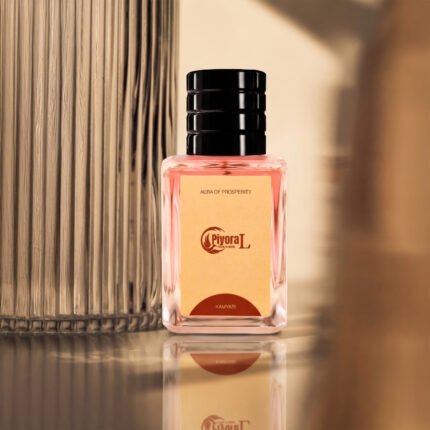
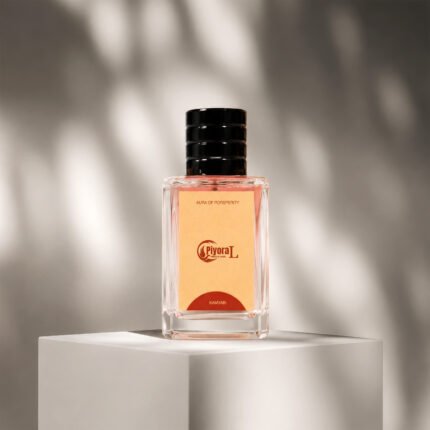
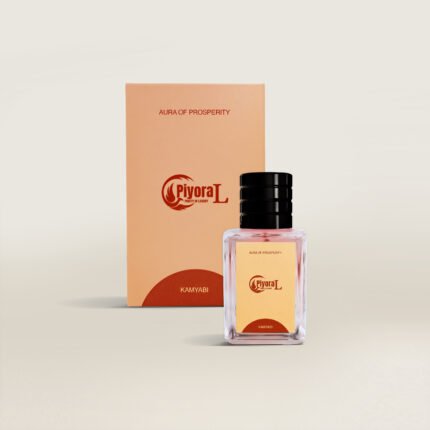
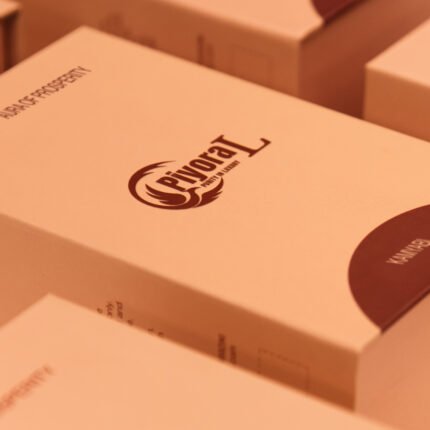
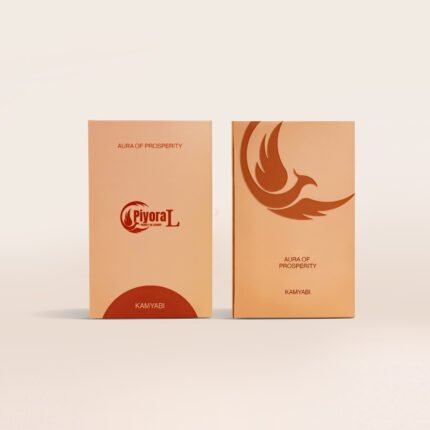
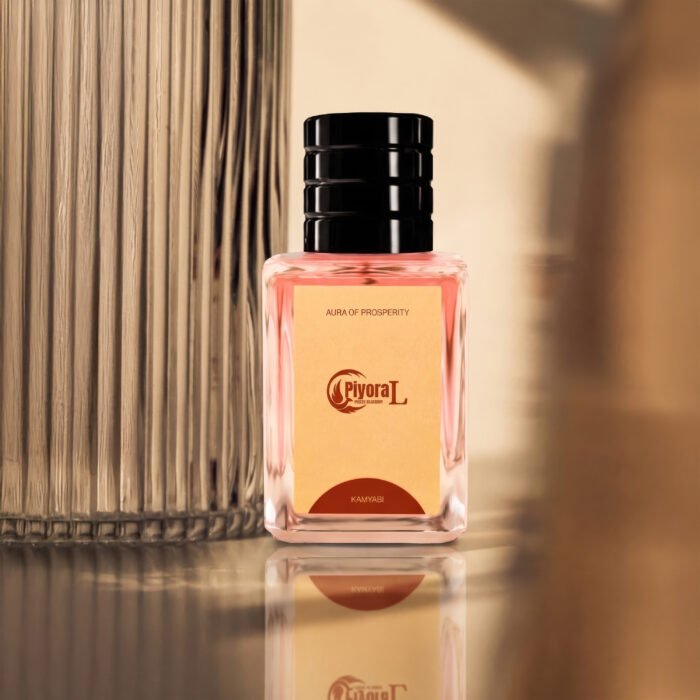
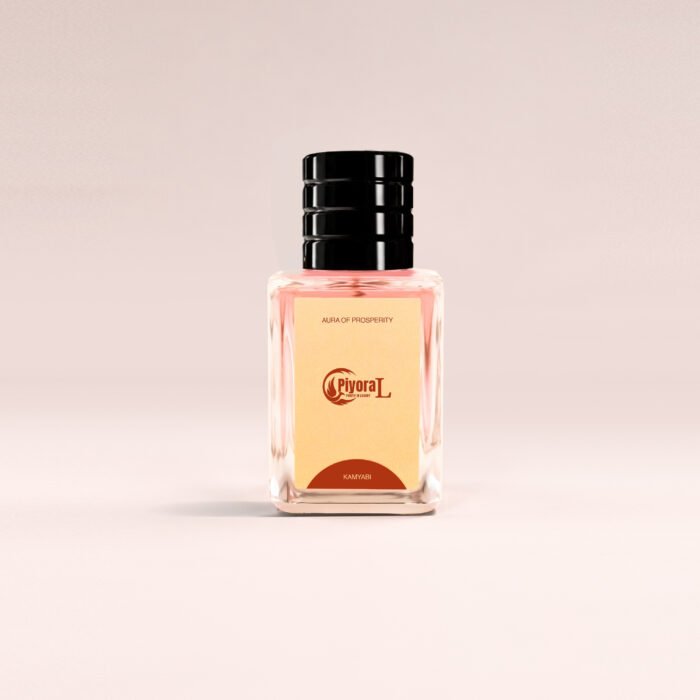
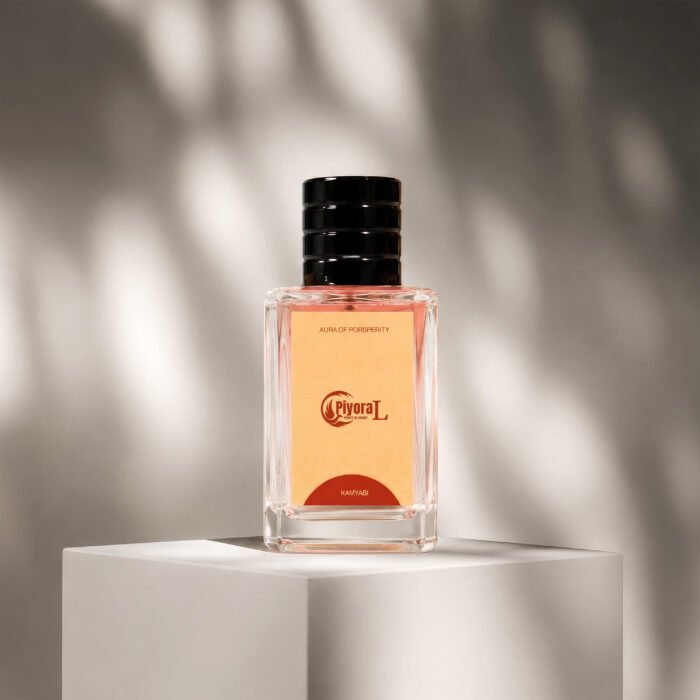
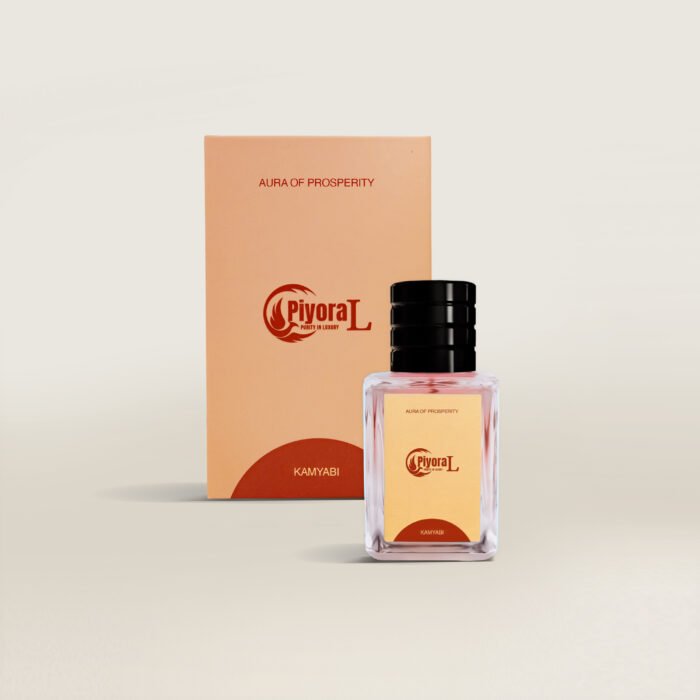
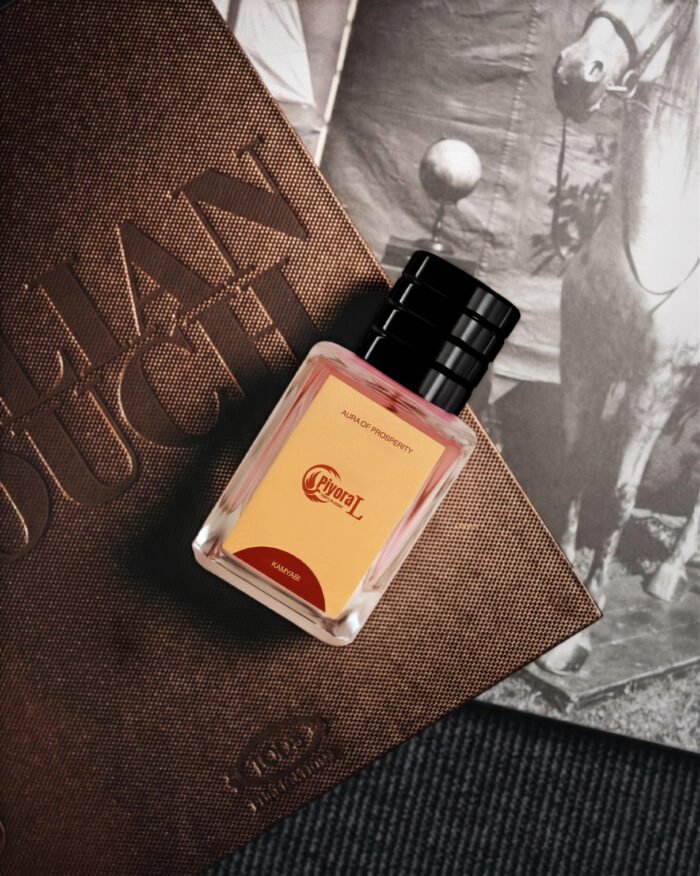
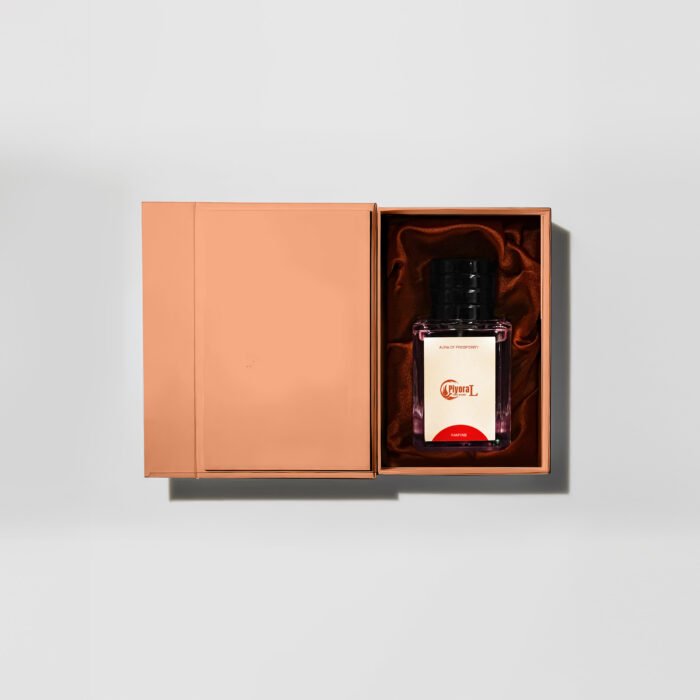
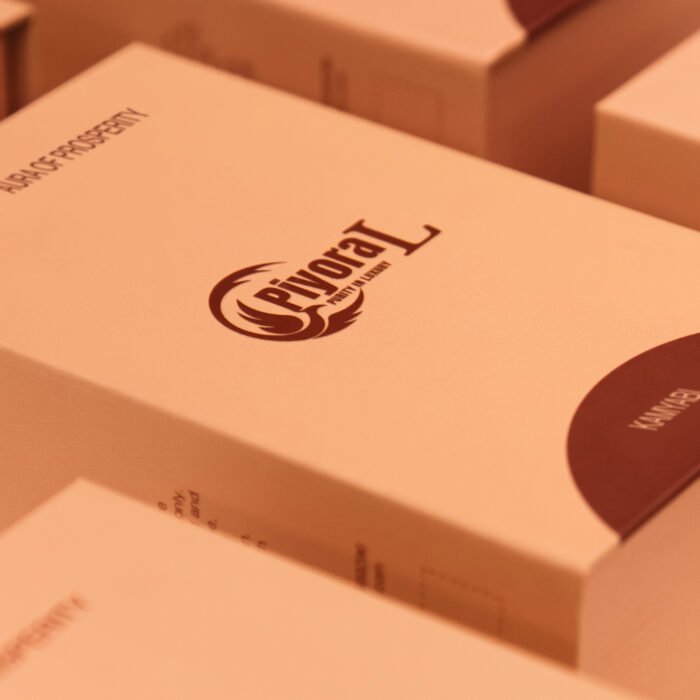
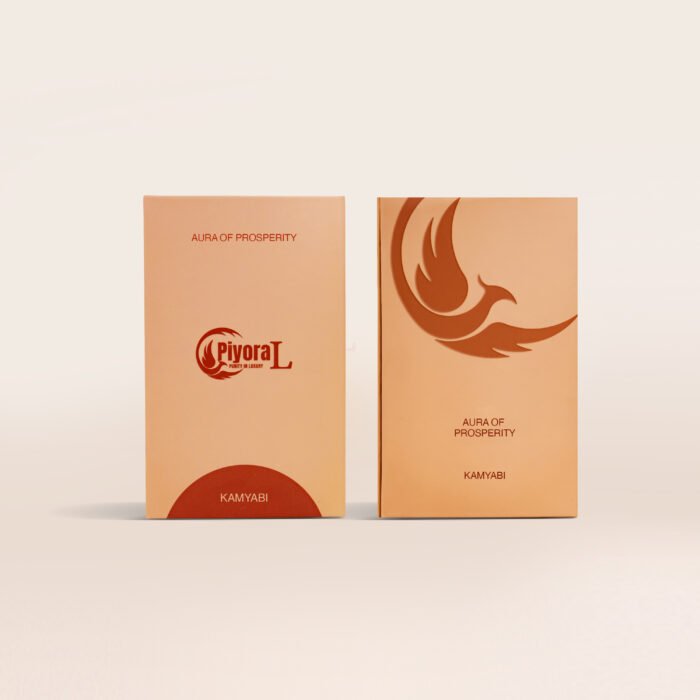
Aura of Prosperity (Kamyabi) – 50 ML
This is a healing-inspired product designed to help support relaxation and energetic alignment.
456 in stock
Cortisol, Testosterone, and the Hormonal Basis of Confidence
Confidence is not purely psychological. It has a measurable hormonal correlate: the ratio of testosterone to cortisol.
Higher testosterone relative to cortisol correlates with dominance, confidence, risk tolerance, and ease with social evaluation. Higher cortisol relative to testosterone correlates with anxiety, self-doubt, and heightened sensitivity to perceived judgment.
Fragrance influences both. Calming scent compounds — particularly linalool in bergamot, geraniol in rose, alpha-santalol in sandalwood — reduce cortisol through their interaction with the GABA system and the HPA (hypothalamic-pituitary-adrenal) axis. Lower cortisol shifts the ratio in the direction of the confident state.
Research on power posing (Amy Cuddy, Harvard) showed that physical posture could shift testosterone and cortisol in the direction of confidence within two minutes. Scent operates through a different mechanism but toward the same hormonal outcome — and it’s faster. The olfactory pathway produces limbic system responses in seconds.
This isn’t a perfect parallel — the power posing research has been partially contested, and scent research has its own limitations. But the underlying principle — that physiological interventions can shift hormonal states and therefore the subjective experience of confidence — is well-supported across multiple research streams.
The Enclothed Cognition Effect — and Its Olfactory Equivalent
‘Enclothed cognition’ is a term coined by researchers Hajo Adam and Adam Galinsky to describe how wearing particular clothing affects the wearer’s cognitive performance and self-perception. When participants wore a lab coat described as a ‘doctor’s coat,’ they performed better on attention tasks than when the same coat was described as a ‘painter’s coat.’ The clothing itself changed nothing — the meaning assigned to it changed performance.
The olfactory equivalent works similarly. A fragrance worn consistently in confident, capable states — during good performances, successful interactions, prepared presentations — becomes associated with those states. Over time, wearing the fragrance begins to cue the cognitive and emotional profile associated with those memories.
This is conditioned cognition through olfaction. It’s why athletes with pre-performance rituals often incorporate scent — the same cologne or fragrance before every competition doesn’t change their physical preparation, but it activates the neural network associated with their best performances.
For everyday confidence — in professional contexts, in difficult conversations, in any high-stakes situation — a fragrance worn consistently in prepared, confident states functions as a performance anchor. The scent becomes the cue. The cue activates the state.
Self-Perception and the External Signal
There is a secondary mechanism worth naming: how wearing a fragrance you associate with confidence affects your own self-perception and behaviour, independent of any neurochemical effect.
Research in social psychology consistently shows that people behave in accordance with their self-image. When self-image is primed toward competence and capability — through any mechanism, including external signals like dress, posture, or scent — behaviour follows. You stand differently. You speak with slightly more authority. You’re less deferential in ambiguous social situations.
A fragrance associated (consciously or through conditioning) with your confident self acts as a self-image primer. This effect is modest but real — and it compounds with the direct neurochemical effect of the fragrance compounds themselves.
What This Means for Choosing a Confidence Fragrance
Given the mechanisms above, the practical implications are:
- The fragrance you use for confidence should contain compounds that reduce cortisol — bergamot (linalool, linalyl acetate) and sandalwood (alpha-santalol) are the best-evidenced options
- It should be worn consistently — the conditioned association is the more powerful long-term mechanism, and it only builds through repetition
- It should be used in contexts where you’re already performing well — this seeds the positive association. Wearing it only when anxious creates a different association
- It should be worn daily, not reserved for big occasions — daily use lowers the cortisol baseline throughout the day, which is the foundation of sustained confidence
Piyora L’s Kamyabi is formulated with bergamot, patchouli, and sandalwood — compounds chosen for their cortisol-reducing and grounding effects. It’s designed to be worn daily as a confidence ritual and before performance situations as a sensory primer.
The Honest Caveat
Scent cannot give you capabilities you don’t have. It can’t compensate for inadequate preparation or mask genuine incompetence from others. What it does is remove a primary inhibitor of confidence — elevated cortisol — and provide a fast-acting neurological primer for the state of readiness.
Used in conjunction with genuine preparation and consistent effort, a well-chosen confidence fragrance is a legitimate performance tool. Used as a substitute for those things, it isn’t.
Know which you’re doing.
| ‘Kamyabi by Piyora L — bergamot, patchouli, and sandalwood. Formulated for the daily confidence ritual and pre-performance priming. Explore Kamyabi |
Frequently Asked Questions
Scent connects directly to the amygdala and hippocampus via the olfactory bulb, bypassing the thalamus that all other senses pass through. This makes it the fastest sensory input to reach the brain’s emotional and arousal centres. Certain compounds in calming fragrances (linalool in bergamot, alpha-santalol in sandalwood) reduce cortisol through GABA system interaction, shifting the testosterone-cortisol ratio toward the confident state. Consistent use builds a conditioned association where the scent begins to activate the confident state automatically through the olfactory-limbic pathway.
Both are real, and they compound. The direct neurochemical effect — cortisol reduction from bergamot and sandalwood compounds — is measurable independently of expectation or belief. The conditioned association effect (where your brain learns to associate a scent with your confident state through repeated pairing) is documented in olfactory psychology research. The enclothed cognition equivalent — where wearing a ‘confidence fragrance’ primes self-perception — is supported by social psychology research. All three mechanisms are genuine. The question isn’t whether the effect is real; it’s understanding which mechanism is dominant in any given instance.
The best-evidenced compounds for confidence are cortisol-reducing ones: linalool and linalyl acetate (found in bergamot) are the most studied, with consistent clinical evidence for cortisol reduction and improved mood state. Alpha-santalol in sandalwood reduces physiological arousal without sedation, supporting calm alertness. Patchouli’s active compounds support groundedness and reduced restlessness. Together these form the basis of an evidence-backed confidence fragrance profile. Synthetic versions of these compounds may replicate the smell but often lack the active compounds responsible for psychological effects.
The direct neurochemical effect (cortisol reduction from inhalation) begins within minutes. The conditioned association — where your brain learns to associate the fragrance with your confident state — builds over two to four weeks of consistent use. Daily wear in contexts where you’re already performing well seeds this association most effectively. After the association is established, encountering the scent begins to activate the confident state more automatically. For maximum effect, use the fragrance consistently rather than only before big moments — the daily baseline use is more important than the one-off pre-performance application.
There’s a secondary effect. Research on scent and social perception consistently shows that people who smell good are rated more positively on competence, attractiveness, and trustworthiness — even by people who don’t consciously register the scent. But the more significant confidence mechanism is internal: the neurochemical and conditioned state effects change how you carry yourself, how you speak, and how you hold social situations — and these behavioural changes are what others actually register. The fragrance doesn’t make you seem more confident; it changes the internal state that produces confident behaviour.
Kamyabi — meaning ‘success’ in Hindi — is a purpose-built confidence and prosperity fragrance by Piyora L. Formulated with bergamot, patchouli, and sandalwood — compounds chosen for their cortisol-reducing, grounding, and calm-alertness-supporting effects. Designed to be worn daily as a confidence-building ritual and used before performance situations (interviews, presentations, important meetings) as a neurological primer. It functions through the olfactory-limbic pathway to support the physiological state associated with confidence, not merely as a fragrance that smells like success.
-
Aura of Attraction (Saccha Rishta | सच्चा रिश्ता) – 50 ML
Original price was: ₹1,699.00.₹1,099.00Current price is: ₹1,099.00. -
Aura of Peace (Anger Control | शांत मन) – 50 ML
Original price was: ₹1,699.00.₹1,099.00Current price is: ₹1,099.00. -
Aura of Prosperity (Kamyabi) – 50 ML
Original price was: ₹1,699.00.₹1,099.00Current price is: ₹1,099.00.